Perspectives · Agentic operations
The Monday morning brief: what a deployed market-intelligence agent actually does.
A working teardown of one agent on my roster. What it monitors, what it ships, where the humans stay in the loop, and the honest economics of what it replaced.
Todd Henderson
/
October 2026
/
5 minute read
Every Monday at 7:30 in the morning, one of my clients gets a market-intelligence brief in their inbox. It covers regulatory moves in their industry, competitor activity, category news, and what each item means for their next client conversation. It is specific enough that their sales team quotes it to prospects.
No analyst produces it. An agent does. I want to show you what that actually means, because "AI agent" has become a phrase that means everything and nothing.
Key takeaways
- A market-intelligence agent monitors a curated source set and ships a structured brief on a fixed cadence, with a source on every claim.
- It replaced roughly a senior analyst-day per week. It replaces the hours between judgments, not the judgment itself.
- Humans own the rulebook: the sources, the voice standards, the compliance framing, and sign-off on anything sensitive.
- The first agent is the expensive one. The marginal agent is cheap. The thinking is the product.
What does a market-intelligence agent monitor?
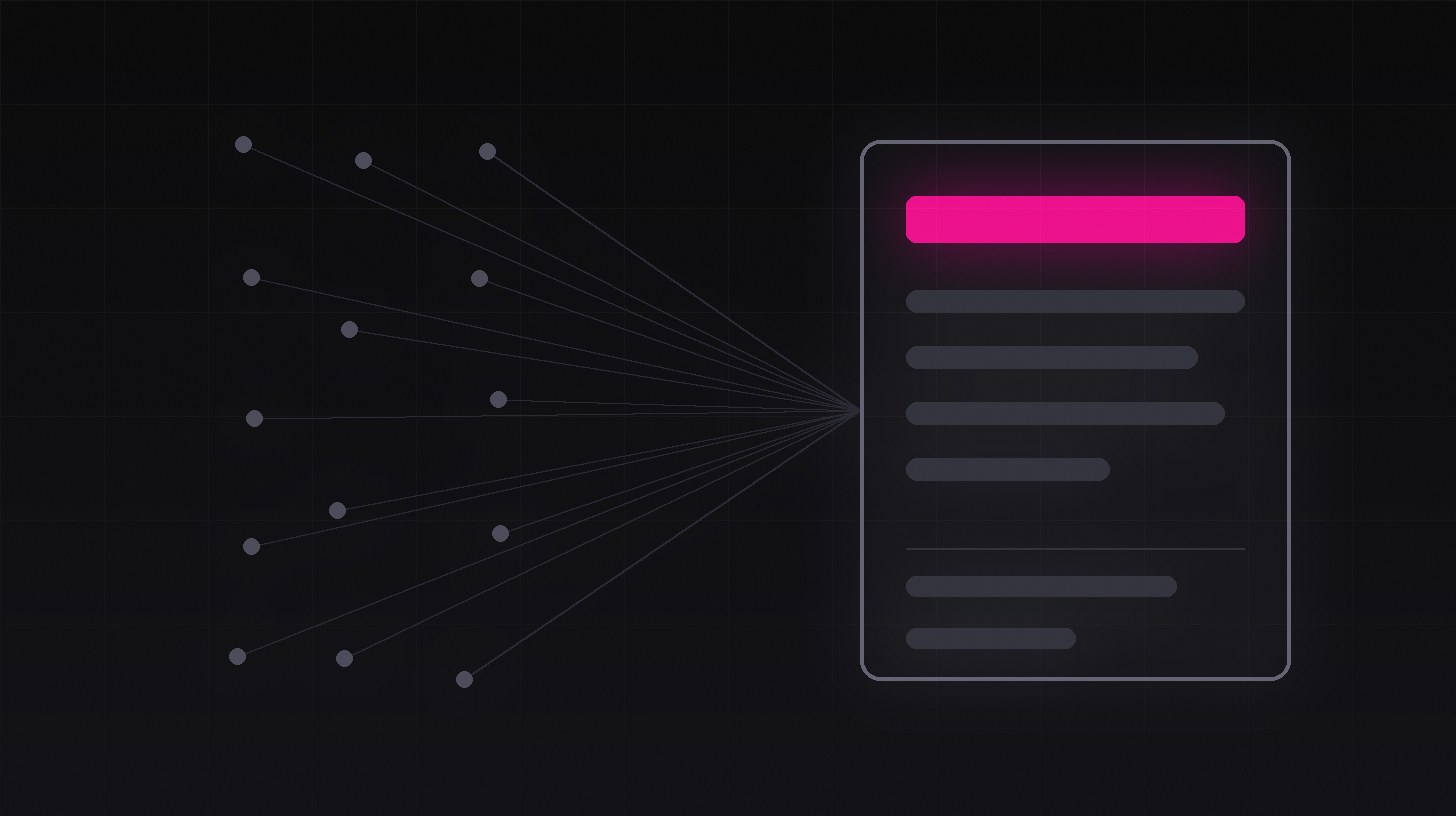
The agent tracks a curated set of sources for the client's category: regulatory bodies, trade press, competitor sites and announcements, and market data. Curated is the operative word. I chose the sources, because an agent pointed at the open web summarizes noise. The value is not that it reads fast. The value is that it reads the right things and ignores the rest.
What does it produce?
A structured brief with a hard format: the one development to watch, why it matters to this client's buyers, what to say about it, and a short tail of secondary items. Every claim carries a source. The format took several revisions to get right, and the revisions were editorial judgments about what a busy executive will actually read. The structure is the product as much as the content is.
Where do the humans stay in the loop?
The agent drafts. The voice standards it writes against, the vocabulary it may and may not use, the compliance framing for a regulated audience: all of that is a rulebook a human wrote and a human updates. When the brief touches something sensitive, it gets read before it ships. The client also gets a plain-English stakeholder email, and the agent drafts that too, to the same standards. This is the same pattern behind everything I run: a senior human defines and reviews while the machine produces on cadence. It is the last 20 percent that keeps the output from reading like everyone else's.
What did it replace, and what did it not?
Roughly a senior analyst-day per week, every week. That is the honest economics of deployed agents: they do not replace judgment, they replace the hours between judgments. The person who decides what matters still matters more than ever. What goes away is the grind of monitoring, summarizing, and formatting that used to consume that person's week. If you are weighing this against adding headcount, that distinction is the whole argument, and I pull it apart in why your marketing team is under-leveraged.
Why the first agent is the expensive one
When the system proved itself, standing up a second one for another brand took an afternoon. That is the other economics: the marginal agent is cheap. The first one is where the thinking lives, and the thinking is the product. The same pattern, senior human defines and reviews while the machine produces on cadence, runs my outbound, reporting, content, and GEO work.
What this means for you
If you are pricing an analyst, a research subscription, or another marketing hire to produce intelligence your team will actually read, you are pricing the wrong thing. The production is now cheap. The scarce inputs are curation, format, and the judgment to say what a development means. Buy those, deploy the agent underneath them, and the weekly brief stops being a cost center and starts being something your sales team quotes.
Frequently asked questions
What is an AI market-intelligence agent?
A deployed AI system that monitors a curated set of sources for a specific market and produces a structured intelligence brief on a fixed cadence. A human defines the sources, the format, and the voice and compliance rules, and reviews anything sensitive before it ships.
Can an AI agent replace a market analyst?
No. It replaces roughly a senior analyst-day of production work per week, the monitoring, summarizing and formatting. It does not replace the judgment that decides what matters. It replaces the hours between judgments, not the judgments.
How do you keep the agent accurate?
Curate the sources instead of pointing it at the open web, require a source on every claim, maintain a human-written rulebook for voice and compliance, and keep a human review gate on anything sensitive before it sends.
About the author
Todd Henderson is a fractional CMO for founder-led companies, pairing 30 years of brand and marketing leadership with a deployed team of AI agents for market intelligence, outbound, reporting, content, and GEO. He is a Co-Founder of Defining.com, the naming and branding agency, and runs his fractional practice as a separate embedded-leadership engagement.